If you buy through a Fieldline link, we may earn an affiliate commission at no extra cost to you. How Fieldline affiliate funding works
Sleeping off the ground changes the camping experience fundamentally. Elevated beds make climbing in and out far easier on stiff knees, create valuable storage room beneath your sleeping area, and keep your bedding completely free of damp terrain and crawling pests. However, a camping cot is not a one-size-fits-all piece of equipment. Packed volume, assembly style, frame clearance, and sleep insulation all dictate whether a cot feels like a luxury or dead weight on your trip.
Understanding the balance between packed portability and sleeping footprint will help you determine the right style for your tent and vehicle setup.
Sleeping on an elevated cot allows cold air to circulate beneath you. As outdoor testing from publications like Outdoor Life notes, sleeping bags compress underneath your body and lose their loft. In cool weather, you must pair your cot with an insulated sleeping pad to prevent convective heat loss, regardless of your sleeping bag rating.
Key Cot Features to Evaluate Before Buying
When browsing cot designs, look beyond cosmetic styling and focus on four critical mechanical and spatial attributes:
1. High-Profile vs. Low-Profile (Ground Clearance)
- Low-Profile Cots (12–18 cm / 5–7 in high): These sit close to the floor on multiple bowed legs. They fit easily into compact backpacking tents or low-ceiling dome shelters without pressing into sloping tent walls. They pack small and keep total weight down, though getting up requires similar mobility to sitting on the floor.
- High-Profile Cots (35–45 cm / 14–18 in high): These mimic the standard height of a household chair or bed. They make sitting, dressing, and getting up effortless, while leaving large bins or duffels stashed underneath. However, they require spacious cabin-style tents with vertical walls.
- Dual-Height Convertible Models: Some modular frames use removable leg extensions to let you switch between low-slung tent configurations and high-standing basecamp setups.
2. Usable Width and Length
Cot frame side rails sit inside or slightly above the fabric plane on many designs. Because your arms or shoulders can press directly against metal side poles, an advertised 65 cm (25.5 in) width may feel narrow for side sleepers or broad-shouldered campers. If you toss and turn, opting for widths between 70 cm and 90 cm provides noticeable comfort gains, provided your tent layout has the floor plan to accommodate it.
3. Frame Style and Assembly Leverage
Most portable folding cots fall into two assembly categories:
- Scissor-Leg / Accordion Frames: Heavy-duty car camping cots that unfold in one continuous motion. They set up in seconds but tend to be heavy (8–12 kg) and bulky when folded.
- Tensioned Crossbar & Side-Pole Frames: Ultralight aluminum tube frames where side poles slide into fabric sleeves and cross-legs snap in under tension. Modern designs often include mechanical lever locks to reduce hand strain during tensioning.
Camping Cots Compared
The following portable cots represent different configurations across length, width, and convertible height. Stated specifications reflect individual seller listings rather than standardized laboratory testing; always confirm final dimensions, pack weights, and included accessories on the seller's product listing prior to ordering.
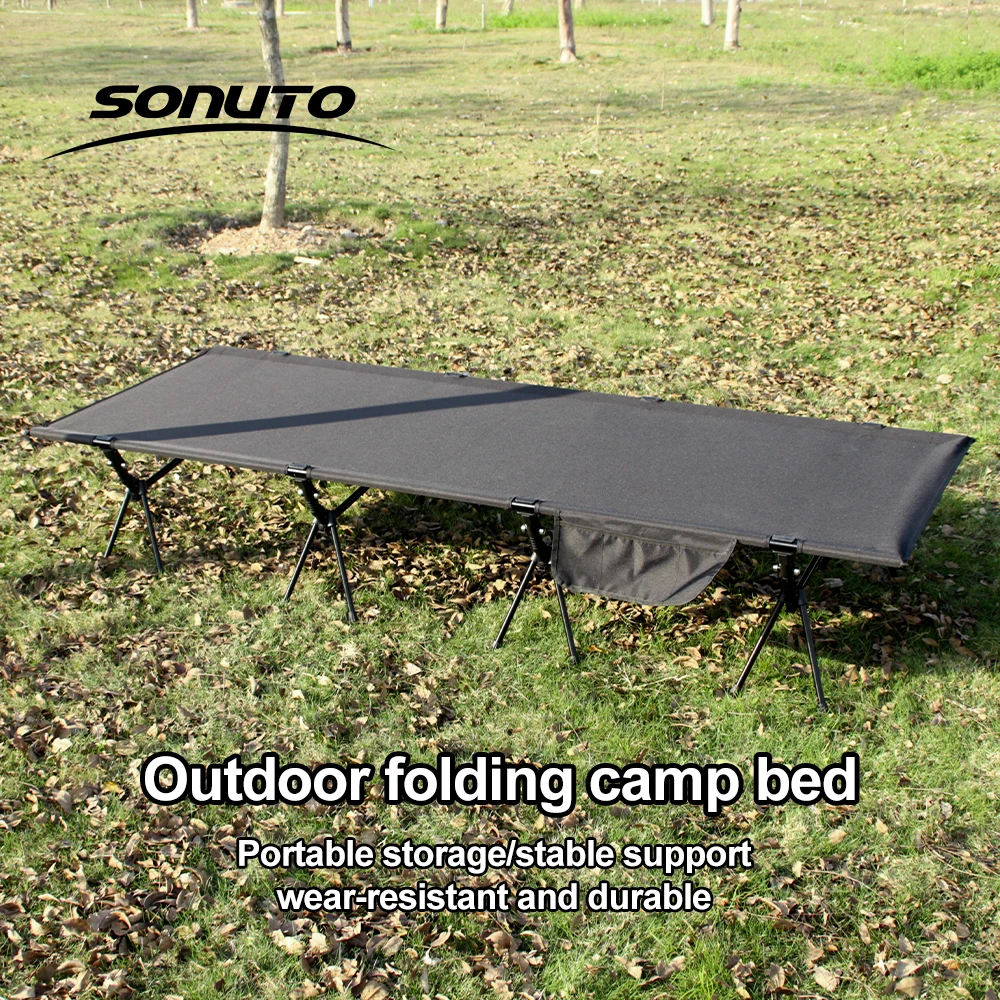
The Sonuto 210x80cm Oxford Camping Cot caters specifically to campers needing extra length and elbow room. With an advertised length of 210 cm (approx. 82.6 inches) and width of 80 cm (approx. 31.5 inches), it provides substantial breathing room for taller adults who feel cramped on standard 190 cm cots. The listing claims a 600D Oxford fabric top and an overall carry weight around 4 kg, balancing extended bed dimensions with manageable vehicle transport.
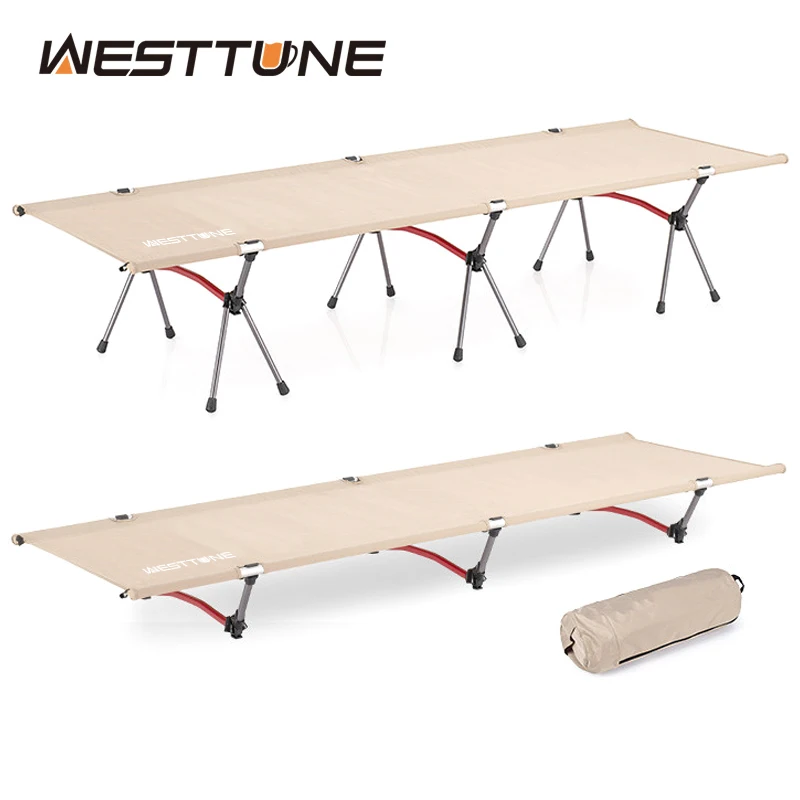
The WESTTUNE Ultralight Aluminum Alloy Sleeping Cot showcases the classic low-profile, multi-leg tension format designed for compact travel. Utilizing arched aluminum crossbars, this style minimizes packed bulk so it can fit into duffels or tight trunk spaces. Because it positions the sleeper close to the floor, it works well in smaller two- or three-person dome tents where vertical headroom is limited.
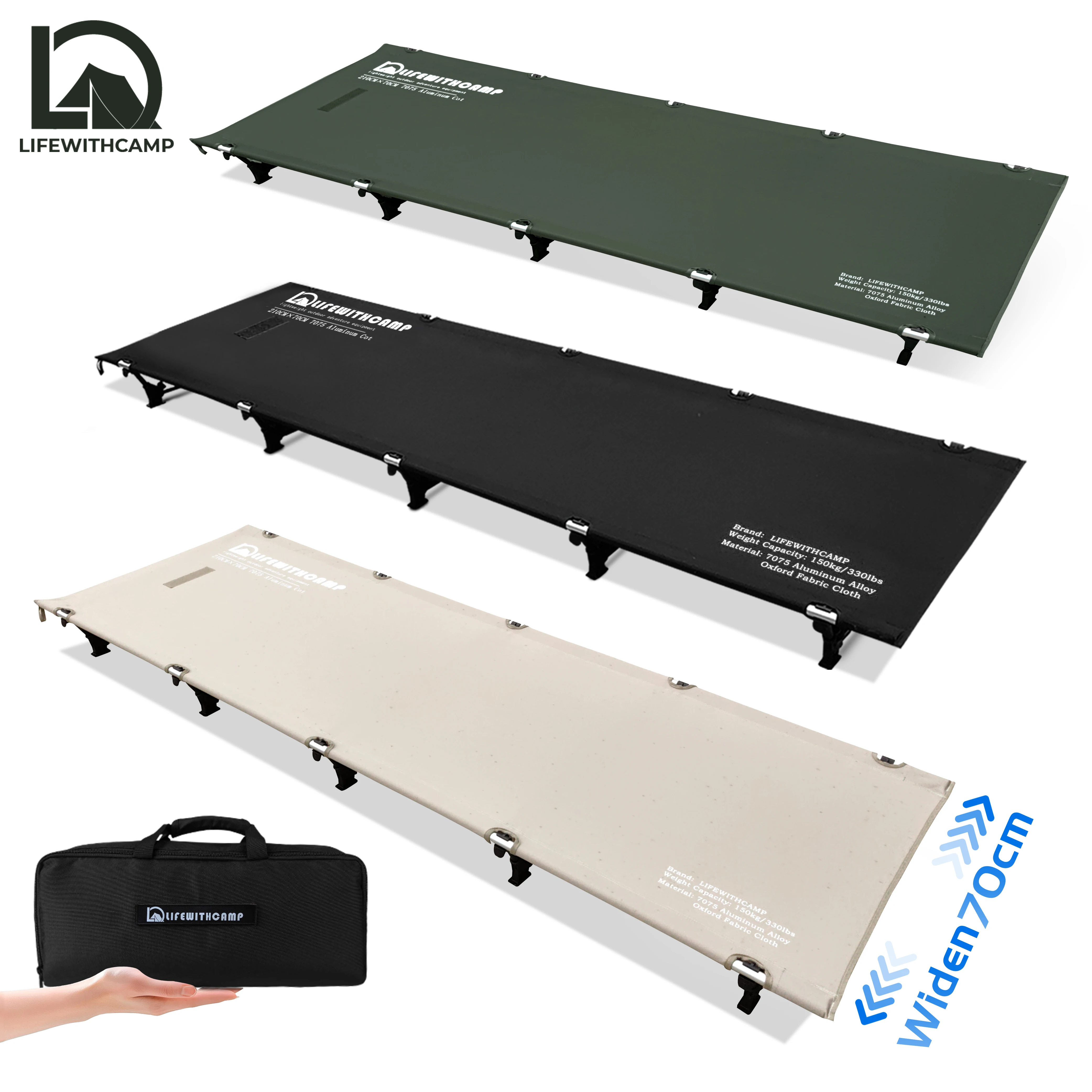
The 70cm Wide Portable Folding Cot from Stone's Store targets mid-size comfort, offering a claimed 70 cm width that bridges the gap between narrow 60–65 cm ultralight cots and heavier oversized models. For backpackers and minimalist vehicle campers who find traditional narrow cots constricting around the shoulders, the added width provides extra sleeping freedom without requiring a bulky dual-stage frame.
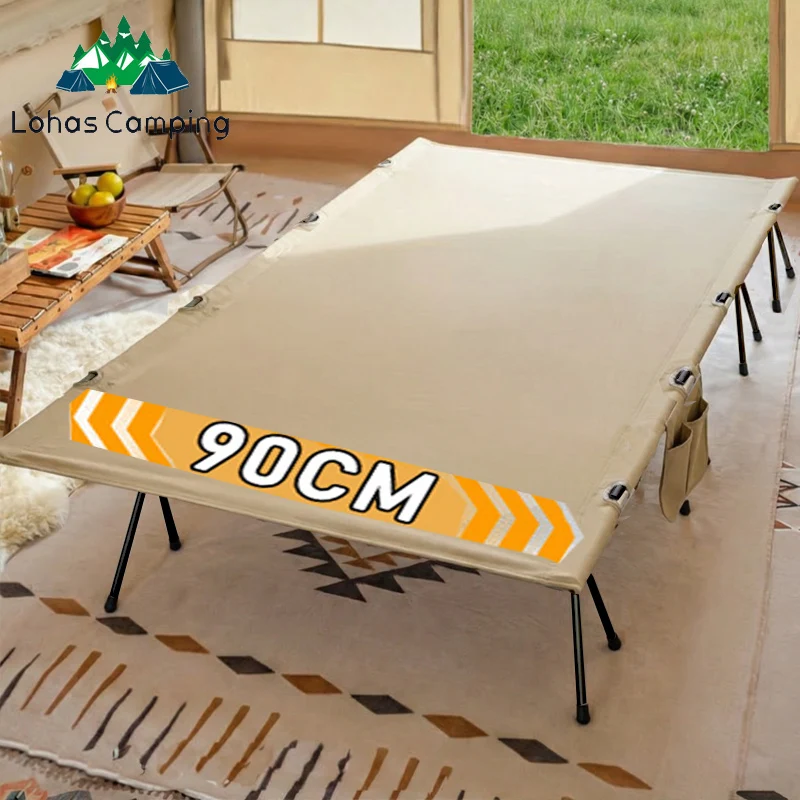
The Lohascamping High-Low Dual-Purpose Cot highlights modularity with its advertised dual-height capability, enabling users to transition between low-clearance tent use and elevated high-profile mode using add-on leg segments. The listing highlights wide size options up to 90 cm, offering generous room for car camping, cabin setups, or guest sleeping quarters at home.
Practical Setup, Tent Care, and Verification Checklist
Using a cot inside a tent introduces practical considerations that floor mattresses do not have. Keep these field tips in mind before heading out:
| Check Area | Why It Matters | What to Confirm Before Trip |
|---|---|---|
| Tent Floor Protection | Cot feet concentrate body weight onto small contact points, risking tent floor punctures. | Place rubber floor cups, cut tennis balls, or a dense moving blanket under cot feet. |
| Sloping Tent Walls | A tall cot pushed against an angled tent wall can force the tent fabric against the rainfly, causing condensation leaks. | Measure tent width at the cot's actual height, not just the floor dimensions. |
| Locking Mechanisms | Tension-lock levers must seat completely to avoid sudden collapse or frame bending during sleep. | Assemble the cot at home first; ensure all locking tabs snap firmly into place according to maker instructions. |
| Thermal Layering | Open air beneath the cot creates drafts, pulling body heat downward overnight. | Lay a closed-cell or insulated inflatable pad on top of the cot fabric before adding bedding. |
Questions to Ask Before Ordering
- Are extension legs included? If a cot is advertised as "high-low dual purpose," confirm whether the riser leg set is part of the standard package or sold separately.
- What is the maximum rated weight capacity? Verify that the manufacturer's stated weight limit provides adequate safety margin for your body weight plus shifting movements.
- What are the packed dimensions? Check the packed carry sack measurements against your vehicle cargo space or backpack side pockets to ensure transport is straightforward.
By matching cot height and width to your tent interior, protecting your shelter's floor, and adding an insulated pad for temperature control, you can establish an elevated, supportive camp sleep setup that performs reliably on every trip.